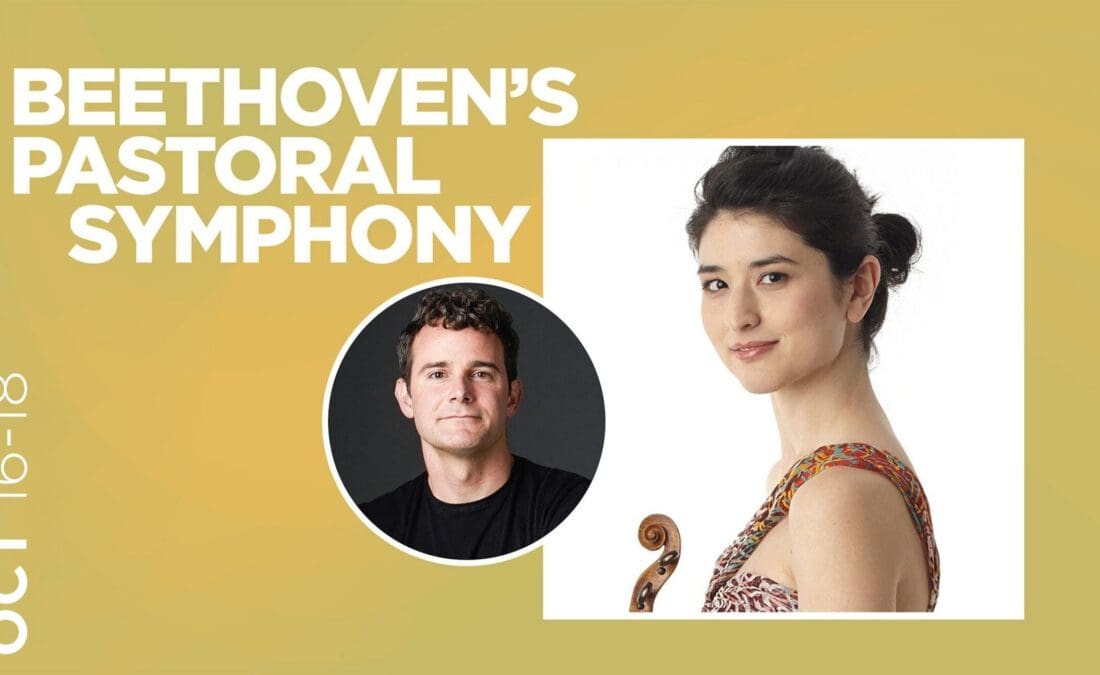
We invite you to read through Michael Allsen’s program notes for the October 16th, 17th and 18th performance of Beethoven’s Pastoral Symphony.
Program Notes
MSO resident conductor Kyle Knox leads our October program, a sumptuous selection of five works, opening with a lovely little early 20th-century impressionist tone poem by Lili Boulanger. Then MSO concertmaster Naha Greenholtz plays the Autumn concerto of Vivaldi’s beloved Four Seasons. She follows this with a 20th-century Argentine take on the seasons: Spring from Astor Piazzolla’s Four Seasons of Buenos Aires, a work inspired by Vivaldi…and by the sensuous rhythm of the Tango. (Kyle and Naha clearly work well together: they are married and are raising three small children!) The MSO brass, woodwind, and percussion sections get a chance to shine in Hindemith’s burly Symphonic Metamorphoses. Rounding out this program is Beethoven’s Symphony No. 6, a loving picture of the Austrian countryside, that served as inspiration for many programmatic works to follow.
This colorful little orchestral piece was one of the final compositions of Lili Boulanger’s tragically short life.
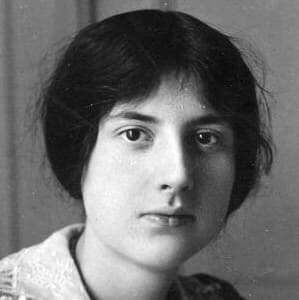
Lili Boulanger
Born: August 21, 1893, Paris, France.
Died: March 15, 1918, Mézy-sur-Seine, France.
D’un matin de printemps
- Composed: 1917-18.
- Premiere: March 13, 1921, by the Pasdeloup Orchestra, at the Paris Conservatory.
- Previous MSO Performance: This is our first performance of the work.
- Duration: 5:00.
Background
Boulanger was the first female composer to win the prestigious Prix de Rome.
The Boulanger sisters, Nadia and Lili, were clearly destined for musical success. They grew up in a household where both their mother and father performed and composed. The girls, both of them phenomenally talented, were encouraged and nurtured in music at an early age. The elder sister, Nadia (1887-1979), composed early in her life, but would make her mark as one of the 20th century’s greatest music teachers, serving as a mentor to three generations of the most prominent European and American composers and musicians. Lili, however, was one of music history’s great “might-have-beens,” her career cut tragically short at age 24. She was recognized as a prodigy when she was only two years old and was initially taught by her parents. After a bout of pneumonia when she was a very young child, however, Lili would remain in frail health, eventually contracting intestinal tuberculosis, a chronic condition that would eventually take her life. Because of her health, she was unable to be a full-time student at the Paris Conservatory, and instead trained with private composition teachers. She eventually enrolled in the Conservatory as a part-time composition student in 1909, primarily to compete for the coveted Prix de Rome, the annual prize awarded to the Conservatory’s most gifted composition student. Nadia had taken second place in the competition in 1908, and their father, Ernest Boulanger, won the prize in 1835. In 1913, Lili became the first woman to win the Prix de Rome. The prize came with a yearlong stay in Rome for study and composition, but her stay in Italy was cut short by the outbreak of World War I. In 1917, as Paris was being bombed by German zeppelins and airplanes, the Boulangers moved some 50 miles away, to the town of Mézy. Lili’s condition worsened, but she continued to compose until her death, dictating her last pieces to Nadia. She left behind a small number of compositions, though it is music that showed her tremendous potential: an unfinished opera, a dozen large choral works and several smaller vocal pieces, two orchestral tone poems, and a few piano pieces. While her music was not particularly groundbreaking, by the end of her short career, she was already developing an individual musical style.
What You’ll Hear
This is an impressionist jewel of a piece, freely developing and colorful throughout.
The very last compositions Lili Boulanger was able to write in her own hand, and her only surviving orchestral pieces, were a pair of short tone poems she finished a few months before her death, D’un matin de printemps (Of a Spring Morning) and D’un soir triste (Of a Sad Evening). This pair might be heard as apt summary of her short life: one exuberant and hopeful and the other dark and mournful. D’un matin de printemps begins with lively, flitting music filled with short woodwind solos, which serves as a kind of main theme tying the work together. There is a more lyrical idea led by the strings, which seems to have a bit of subtle humor. After a brief reminder of the opening, there is a more introspective episode for violin and celeste: marked “mysterious” in the score. The piece ends with a return of the bubbly opening music and a dramatic flourish from the harp.
Vivaldi’s picturesque Four Seasons concertos are indisputably his “greatest hits” today…and they were also very popular in his own day.
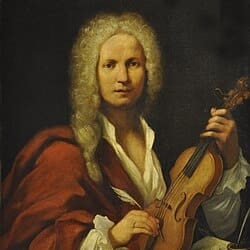
Antonio Vivaldi
Born: March 4, 1678, Venice, Italy.
Died: July 28, 1741, Vienna, Austria.
Autumn from “The Four Seasons” (Violin Concerto in F Major, Op. 8, No. 3, RV 293)
- Composed: ca. 1710-15.
- Premiere: Unknown.
- Previous MSO performance: the Autumn concerto was played in 2007 by Robert McDuffie, as part of a complete performance of The Four Seasons.
- Duration: 9:00.
Background
The four concertos were published in 1725 but may have been written as much as 10 to 15 years earlier.
Vivaldi’s solo violin concertos—over 230 of them!—were mostly written to feature Vivaldi himself, a virtuoso violinist with a high reputation among his contemporaries. Though his works were passed around Europe in handwritten copies, they were also well known in a series of printed collections, mostly published by his business partners in Amsterdam. Vivaldi’s Opus 8 collection of 1725 was given the fanciful title Il cimento dell’armonia e dell’inventione (The Contest Between Harmony and Invention). The first four concertos of Il cimento are collectively known as The Four Seasons. Each is given a descriptive title: La Primavera (Spring), L’Estate (Summer), L’Autunno (Autumn), and L’Inverno (Winter). Programmatic titles like this were not unusual for Vivaldi, but here he goes a step further, publishing sonnets with each concerto that describe the action of each season. The concertos of The Four Seasons were internationally known even in Vivaldi’s lifetime. The concertos are an even bigger hit today—arguably the most familiar pieces of Baroque music. Since the first complete 78-RPM records of the concertos in 1942, there have been—by conservative estimate—nearly 400 recordings.
Aside from the striking musical imagery suggested by the sonnets, the music of the concertos is typical, matching the style of the many other solo violin concertos by Vivaldi—placing a solo violin part in contrast with a small string orchestra with harpsichord continuo, Typically, he sets the concertos in three movements, fast-slow-fast. The outer fast movements have the typical alteration of ritornellos—passages for the entire ensemble—and flashier solo sections. Slow movements are generally more vocal in conception, emulating the passionate vocal display of contemporary Italian opera. But it is of course the wonderfully programmatic aspects of the concertos of The Four Seasons that make them so attractive.
What You’ll Hear
Lighthearted Autumn opens with a scene of drinking and harvest celebration among peasants. In the slow movement, they have fallen into a somewhat disturbed drunken sleep. The final movement depicts hunters with horn signals and dogs, as well as their prey.
Autumn is optimistic throughout, and the first movement is a rustic harvest party. There are quick and witty solo passages, perhaps representing the peasants who have had just a bit too much of “Bacchus’s liquor” and stumble around until they finally settle down to sleep—a quiet passage that sounds suspiciously like a lullaby. Their snooze is cut short by a final dancing ritornello. Vivaldi titled the slow movement “Sleeping Drunks”—a series of quiet and sometimes startlingly chromatic chords that allow the continuo part to create most of the melodic interest. In the third movement, Vivaldi once again exercises his full programmatic powers: virtually everything in his poem—from hunting horns and barking dogs to the terrified quarry—shows up clearly in the music. It all ends tragically—for the deer, anyway—and the hunters close with a last joyful ritornello.
One of Argentina’s greatest composers, Piazzolla was known for his innovative fusions of his native Tango with rock, jazz, and modernist classical music.
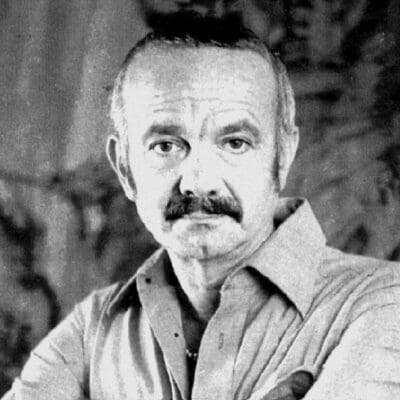
Astor Piazzolla
Born: March 11, 1921, Mar de Plata, Argentina.
Died: July 4, 1992, Buenos Aires, Argentina.
Spring from “Four Seasons of Buenos Aires”
- Composed: Piazzolla composed his Four Seasons (Cuatro Estaciones Porteñas) in 1967-1969 as separate works. Leonid Desyatnikov created the version for solo violin and string orchestra heard here in 1999 for violinist Gidon Kremer.
- Premiere: Piazzolla and his quintet played the works together for the first time at the Teatro Regina in Buenos Aires, on May 19, 1970. Kremer recorded the version heard here in 2000.
- Previous MSO Performance: Spring (Primavera Porteño) was played by Nadja Salerno-Sonnenberg in 2009, as part of a performance of the complete set.
- Duration: 7:00.
Background
The four sections of his Four Seasons we originally performed as independent works. Arranger Leonid Desyatnikov later assembled the version for violin and string orchestra heard here.
The Argentine composer Astor Piazzolla was a child prodigy on Argentina’s national instrument, the bandonéon—the large button accordion that is the lead instrument of the Tango. Beginning at age 16 he spent the next several years playing in dance bands, eventually leading his own successful orquesta típica, the standard ensemble of Tango. He studied classical music with composer Alberto Ginastera, but in 1954 won a scholarship to study in Paris with one of the 20th-century’s great composition teachers, Nadia Boulanger. It was Boulanger whom Piazzolla credited with helping to create his own style. Piazzolla returned to Argentina after a year in Paris, and began to forge a distinctive style, eventually known as “Nuevo Tango.” “New Tango” proved to be controversial in his homeland: while Tango is among the world’s sexiest dances, the music is quite tradition-bound, played by a standard ensemble, the orquesta típica, of bandonéon, violins, piano, piano, and double bass. Piazzolla’s works eventually included electric bass and guitar, synthesizer, and other distinctly “non-típica” instruments. He also channeled a wide range of musical ideas, from Jazz and Fusion to more avant garde idioms—but with the syncopated sensuousness of the Tango always present. By the end of his career Piazzolla was widely heard and commissioned around the world. And the creation of “new” Piazzolla works continued after he died in hundreds of arrangements and reinterpretations of his over 750 works.
The Four Seasons of Buenos Aires (Cuatro estaciones porteñas) heard here is just such a posthumous collaboration. Piazzolla wrote the four sections of this work for his quintet (bandoneón, piano, violin, electric guitar, and electric bass). In 1999, the Russian composer and arranger Leonid Desyatnikov, working with violinist Gidon Kremer, reworked Piazzolla’s originals into a set of four virtuoso movements for solo violin and string orchestra. This arrangement transforms Piazzolla’s originals into a set of virtuoso character pieces, very much in the spirit of Vivaldi.
What You’ll Hear
The work has a three-part form. The outer sections are based upon a strident Tango theme, and there is a long soulful middle section.
Spring is a fierce, syncopated tango-fugue, with its opening phrases punctuated by scratches and sighs. After the ferocious tango theme is picked up by the entire orchestra, there are a couple of witty references to the “thunderstorm” from Vivaldi’s Spring concerto. The movement has a languorous, sexy central section before returning to a frenetic version of the opening. At the very end, there is another brief tongue-in-cheek reference to Vivaldi.
Hindemith’s Symphonic Metamorphoses was written while he was a professor at Yale University, having fled Germany before the outbreak of World War II.
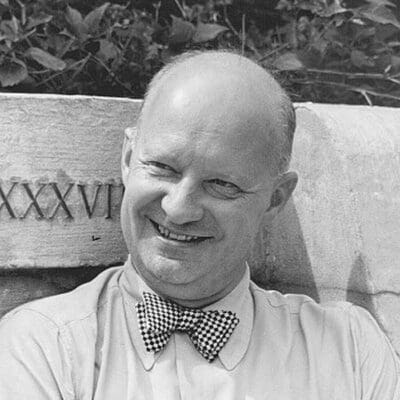
Paul Hindemith
Born: November 16, 1895, Hanau, Germany.
Died: December 28, 1963, Frankfurt, Germany.
Symphonic Metamorphoses on Themes of Carl Maria von Weber
- Composed: 1940-43.
- Premiere: January 20, 1944, with Artur Rodzinski conducting New York Philharmonic.
- Previous MSO Performances: 1990, and 2001
- Duration: 22:00.
Background
This virtuoso showpiece for the orchestra was initially sketched out as a ballet score.
Like many German composers and musicians, Hindemith fled to the United States in the years before World War II to escape the increasingly tight cultural controls imposed by the Nazis. When he joined the faculty of Yale University in 1940, he was approached with several commissions for new works. Among these was a ballet based upon the music of Carl Maria von Weber (1786-1826): a collaboration with choreographer Leonid Massine. In the early stages of the Weber project, it became obvious that Hindemith’s conception of the score was much more elaborate than what Massine had in mind. Though the proposed collaboration failed, Hindemith resurrected his ballet score a few years later, completing a version for large orchestra in August of 1943.mThe result, his Symphonic Metamorphoses, is a masterwork of orchestration, with heavy emphasis on the brass, woodwind, and percussion sections. Hindemith calls for expert technique from most of these players. The themes for this orchestral showpiece are drawn from Weber’s largely-forgotten music for piano, four hands, and from a rather obscure piece of stage music—Hindemith himself noted that none of this music represented Weber at his best. However, this aspect of its background is part of the appeal of Symphonic Metamorphoses. “Metamorphosis” means a change, usually a change to a new state of being. In the hands of a lesser composer, this second-rate melodic material might have turned into a third-rate piece. However, Hindemith transcends the original material, sometimes building upon Weber’s original intentions (as in the lively Roma-style free-for-all in the opening movement) and sometimes re-working them in a more modern idiom (as in the jazzy fugue of the second movement).
What You’ll Hear
This work is set in four movements:
• A wild Hungarian-style opener.
• A scherzo based upon a pentatonic “oriental” theme.
• A gentle show movement.
• A brassy march.
The first movement (Allegro) has a distinctly Hungarian flavor. Hungarian music, particularly the music of the Roma, held a great deal of fascination for Weber and his contemporaries, who composed hundreds of works that emulated Roma melodies. Hindemith chose one such piece as the basis for the first movement, the fourth of Weber’s Eight Pieces for Piano, Four Hands. Hindemith’s treatment retains the Hungarian zest in a vigorous march style, with punctuation by the brass and filigree by the woodwinds. The movement includes a delightful oboe solo during its middle section.
In 1809, Weber was commissioned to write incidental music to Schiller’s play Turandot. In keeping with the play’s Chinese setting, Weber adopted a “genuine” Chinese melody that he had found in Rousseau’s Dictionnaire. Although the authenticity of the melody is questionable, it was set in a pentatonic scale that undoubtedly sounded exotic and oriental to early 19th-century listeners. For the second movement (“Turandot.” Scherzo) Hindemith retained this melody but enhanced the Oriental character of the setting. The movement opens quietly with woodwinds and percussion and continues as a series of variations on Weber’s theme. The central fugue, played by the brasses, is a transformation of the “Chinese” tune with a hint of jazz flavoring.
The third movement (Andantino) features a much lighter orchestration, focusing on the strings and solo woodwinds. The themes for the quiet and lyrical Andantino are drawn from Weber’s Six Easy Pieces for Piano, Four Hands. The first theme is presented by the solo clarinet and the second by the cellos. After combining the two for a moment, Hindemith brings back the clarinet theme, now in combination with a flute countermelody.
For the final movement, Hindemith again draws music from Weber’s Eight Pieces, in this case a little Marcia. The movement opens with a brass fanfare and Weber’s Marcia set as a menacing minor-key march. This opening section contains echoes of Mahler (mixed with a few references to Berlioz). Hindemith then moves to a major key, with a horn-call version of the melody that recalls Weber’s opera Der Freischütz. Both melodies are presented again, in amplified form, and the movement closes with a major-key transformation of the march theme and the opening fanfare.
Beethoven himself labelled his sixth as the “Pastoral” Symphony, a tribute to his love of life in the country. This is a gentle, but also —for its time—a revolutionary work. Its five movements include rustic dances, exuberant birdsongs, and a remarkably realistic thunderstorm.
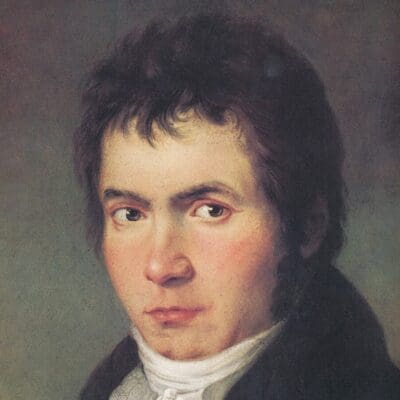
Ludwig van Beethoven
Born: December 17, 1770 (baptism date), Bonn, Germany.
Died: March 26, 1827, Vienna, Austria.
Symphony No. 6 in F Major, Op. 68, “Pastoral”
- Composed: Between 1803 and 1808.
- Premiere: December 22, 1808 in Vienna.
- Previous MSO Performances: 1931, 1932, 1955, 1975, and 2005.
- Duration: 46:00.
Background
This is a work whose programmatic form had a profound influence on composers in the later 19th century.
“No one can love the country as much as I do.”
– Beethoven
At some point in 1803, Beethoven sketched a brief musical passage of flowing triplets he titled “the murmuring of the brook”—what seems to have been the very earliest bit of what would become his pastoral symphony. While he collected additional ideas over the next few years, the bulk of the Symphony No. 6 was written in 1808, at roughly the same time as the Symphony No. 5. Both symphonies were performed for the first time at a benefit concert in Vienna in December, 1808. The program for this landmark event also included excerpts from his Mass in C and the concert aria Ah, perfido, together with premieres of two works with Beethoven himself at the piano, the Piano Concerto No. 4 and the hastily-composed Choral Fantasy.
Despite their pairing, the fifth and sixth symphonies are astonishingly different works. Later writers worked hard to hear a “program” (a “story line” or other extra-musical idea) in the fifth, but it was probably conceived as an expression of purely musical ideas: particularly the intense, almost relentless development of musical themes. The sixth is clearly programmatic, however. Beethoven suggested in his own writings that this work should bring up associations of country life in the minds of its audience. The title “pastoral” is from Beethoven himself, though he was careful to make a distinction between the kind of subtle feelings he was trying express in the sixth symphony and the sensational programmatic pieces that were all the rage in France and Austria at the time. It was this programmatic aspect of the sixth that most excited Romantic musicians: it was clearly the inspiration for Berlioz’s Fantastic Symphony and Schumann’s “Spring” symphony to give just two early examples. It was successful in Beethoven’s own time as well: one review of the premiere called the “Thunderstorm” movement “unsurpassedly beautiful.” Another reviewer of an early performance remarked that: “The whole work is sure to meet with great approval everywhere, so long as one enters cheerfully and with good will into the spirit of the author’s intentions, without a preconceived opinion.”
The “author’s intentions” in the sixth seem to be summed up best in an annotation to one of Beethoven’s sketches: “Pastoral Symphony—who ever also treasures country life can discover for himself what the author intends.” Beethoven’s love of the country is well-known: he enjoyed long walks in the countryside, and much of the sixth was written in a country house in the small town of Heiligenstadt outside of Vienna.
What You’ll Hear
Beethoven used a unique five-movement form in this work:
• A broad movement in sonata form but remarkably lacking in the drama of a typical Beethoven symphonic movement.
• A placid slow movement, which ends with a set of woodwind birdcalls.
• The final three movements are played without pause, beginning with a rustic dance-style scherzo.
• A ferocious thunderstorm.
• A gentle finale, based upon a hymnlike main theme.
The sixth is formally innovative, abandoning the traditional four-movement plan in favor of five movements in which the last three form a single unit. The opening movement (Allegro non troppo) is set in a generously-proportioned sonata form, but unlike most of Beethoven’s first movements, there is no furious intensity in his development, but a remarkable gentleness of tone throughout. In a violin part, Beethoven made brief notes at the beginning of each of the five movements that suggest specific associations, in this case, “Pleasant, cheerful feelings aroused on approaching the countryside.” Both main themes are quiet and happy, first a country-dance tune above what might be an unchanging bagpipe drone and then a more active second theme. There are only occasional hints of the minor in the long development section, and when the recapitulation arrives, there is no great drama preceding it, but just the quiet satisfaction of a good tune being restated by the full orchestra. The coda is also understated: a final rounding-off of the main idea surrounded by witty clarinet lines.
This placid mood continues in the second movement (Andante molto moto – “Scene by the brook”). Here again he uses sonata form with none of the usual fire and fury. If he did indeed intend this as musical picture of a brook, the constantly undulating string accompaniment is the aquatic background to a series of lovely woodwind themes. Near the end there is a birdlike group cadenza for solo woodwinds. As if anyone could miss his intention, Beethoven labeled these passages in the score: “nightingale,” “quail,” and “cuckoo.”
The final three movements are played without a pause. The third movement (Allegro – “Happy gathering of villagers”) is set as a scherzo, but the tempo is relaxed, as Beethoven launches into a set of rustic dances. Two triple-meter themes begin this set, a jolly bagpipe-style tune and a more delicate idea passed among the flute, clarinet, and horn. The contrasting trio section is a rustic duple-meter dance for the full orchestra. All of these ideas are restated, and just when it seems that he is going to round off the movement, there is a quiet rumble, and the texture changes abruptly (Allegro), as wandering string lines gather intensity above bass tremolos. The “Thunderstorm” doesn’t take long to break, with a crashing fortissimo chord and a series of lightning strikes. Beethoven used a series of shockingly dissonant chords and surprising orchestral effects to paint his storm. The storm passes quickly however, leaving a calm, pastoral duet of clarinet and horn to introduce the finale (Allegretto – “Shepherd’s song. Grateful thanks to the Almighty after the storm”). The main idea is serene and hymnlike: Beethoven wrote the words Herr, wir danken dir (Lord, we thank you) in his score at this point. This melody appears in both varied and original forms throughout the movement. Once more, the mood is tranquil throughout, as the movement weaves its unhurried way to a quiet conclusion.
program notes ©2026 by J. Michael Allsen
To view current and past program notes, please visit Michael Allsen’s website.